
07/10/2025
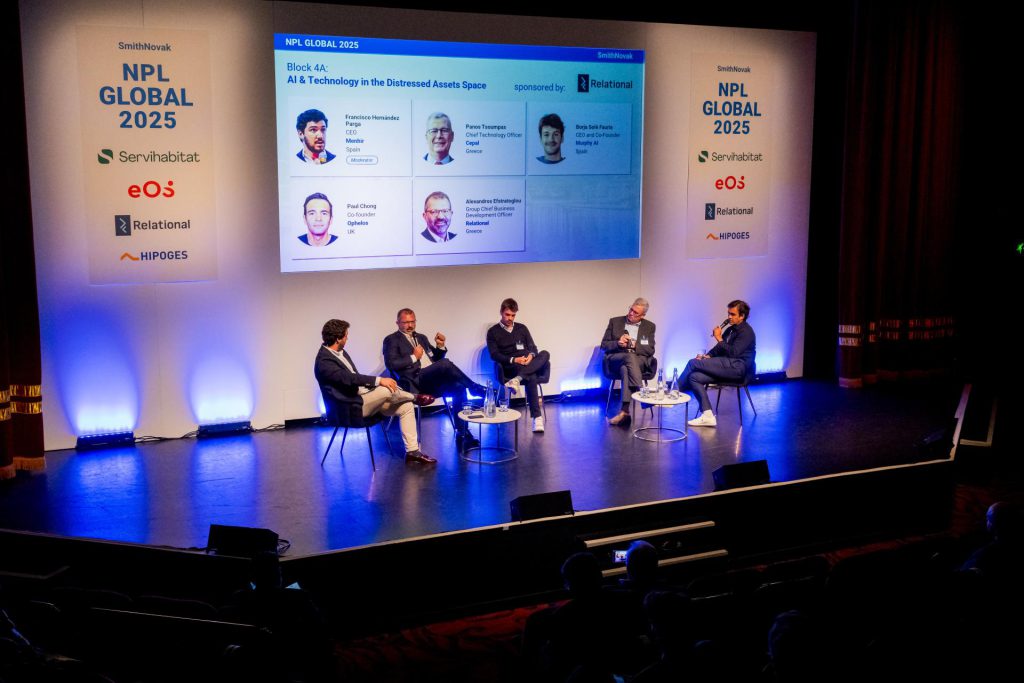
Last week in London, Relational took part as a sponsor and active participant in SmithNovak’s NPL Global 2025, the leading international conference dedicated to the evolving landscape of global distressed assets market.


While previous years focused on potential, innovation, and future possibilities, this year’s discussions were grounded in a more practical question:
Where is AI already delivering measurable impact — and what is still holding it back?
As part of the panel on Technology & Innovation in Servicing, I had the opportunity to contribute to this discussion alongside industry peers. What emerged was a much more mature, experience-based view of how AI is being adopted across collections and recoveries.
There is growing consensus across the industry that AI is no longer experimental in collections. However, its impact is not evenly distributed across the lifecycle.
The most consistent and measurable gains today are seen in:
These are areas where better decisions translate directly into:
Rather than replacing existing processes, AI is enhancing the decision layer — making collections more focused, timely, and effective.
Despite the progress, implementation challenges remain very real.
Across multiple discussions and exchanges, two constraints were repeatedly highlighted:
Many organisations still operate in environments where data is fragmented, partially unstructured, or difficult to access in real time. In such cases, even the most advanced models cannot deliver meaningful results. AI, in practice, is not limited by algorithms — it is limited by data readiness and system integration.

One of the key themes of the panel was how institutions evaluate the success of AI initiatives.
Traditionally, collections performance has been measured through:
While these remain essential, they no longer capture the full value of AI.
Organisations are increasingly recognising additional dimensions, such as:
This broader perspective reflects a shift: AI is not just improving performance — it is changing how operations are structured and scaled.
Perhaps the most fundamental transformation observed is the move away from agent-driven, reactive workflows toward automated, event-driven processes.
Three years ago, many collections operations relied heavily on:
Today, we increasingly see:
This does not eliminate the need for human involvement — but it significantly reduces low-value manual work and improves consistency across operations.
Another strong trend is the evolution of borrower interaction models. Digital channels — including portals, messaging, and conversational AI — are taking over a growing share of communication, particularly in early-stage collections. However, the industry is not moving toward full automation.
Instead, the dominant model is becoming hybrid:
This shift is also redefining the role of collections agents, who are increasingly expected to:
rather than simply execute predefined workflows.
A recurring topic throughout the event was the role of regulation in AI adoption. Contrary to common perception, regulation is not slowing innovation — it is shaping it.
Requirements around:
are pushing organisations to design AI solutions that are not only effective, but also robust and controllable. In the European context especially, governance frameworks are becoming a core component of any AI initiative.
One of the most valuable aspects of the discussion was the sharing of real-world experiences — including where things did not work as expected.
Common pitfalls include:
Successful implementations, on the other hand, tend to share a common approach: Start with clearly defined use cases, ensure data reliability, and scale only after measurable impact is proven. This pragmatic approach is increasingly replacing large-scale, top-down transformation attempts.
Looking ahead, several trends are becoming more visible:
At the same time, areas such as litigation optimisation, portfolio valuation, and advanced recovery modelling are expected to see further development, although they are currently less mature than early-stage collections use cases.
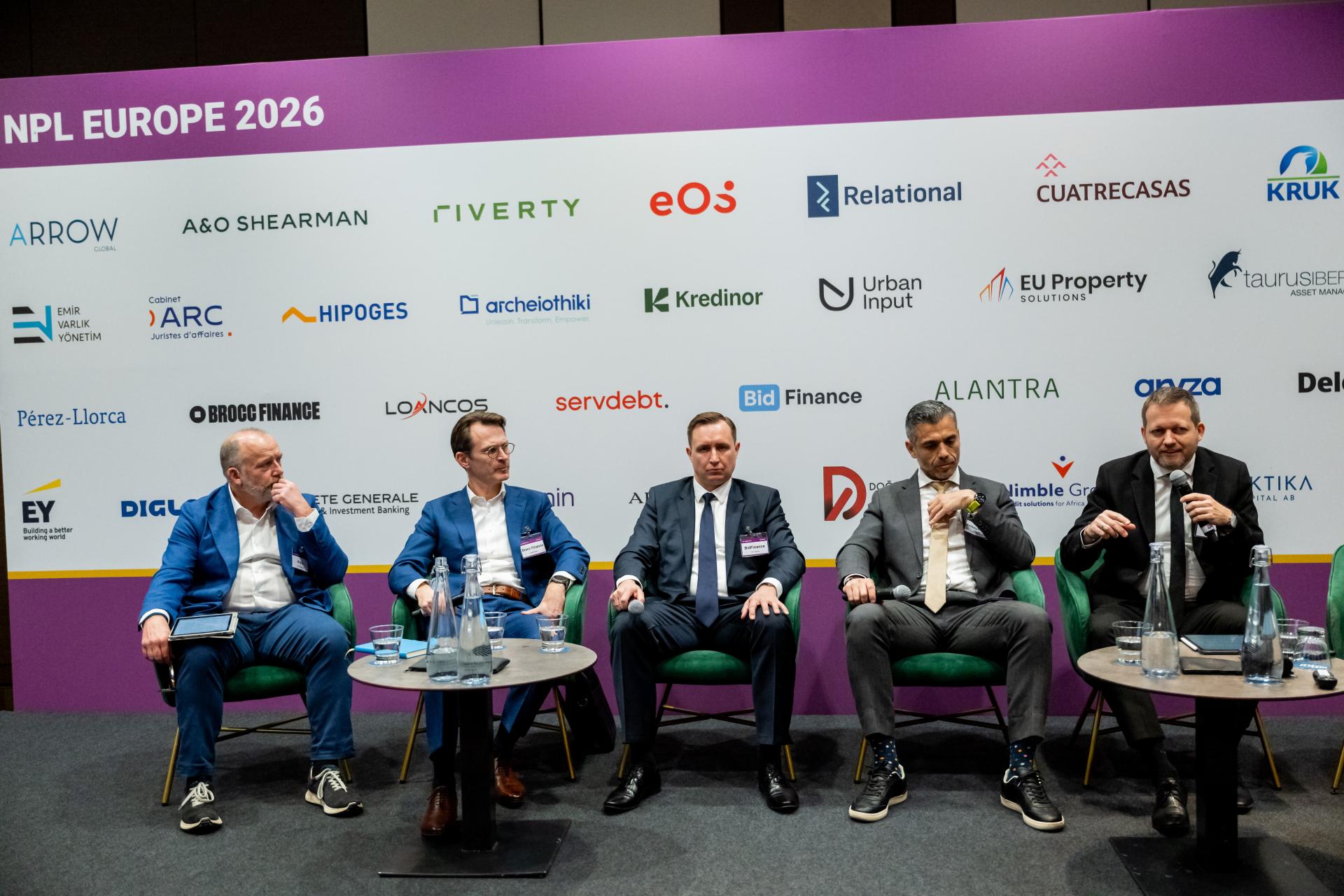
NPL Europe 2026 highlighted a clear shift in the industry. The conversation is no longer about whether AI will transform collections —but about how to implement it effectively, responsibly, and at scale.
The key takeaway is simple: AI delivers value where it is grounded in data, integrated into workflows, and aligned with real operational needs. For organisations that approach it in this way, the opportunity is not just incremental improvement — but a fundamental upgrade in how collections and recoveries are managed.